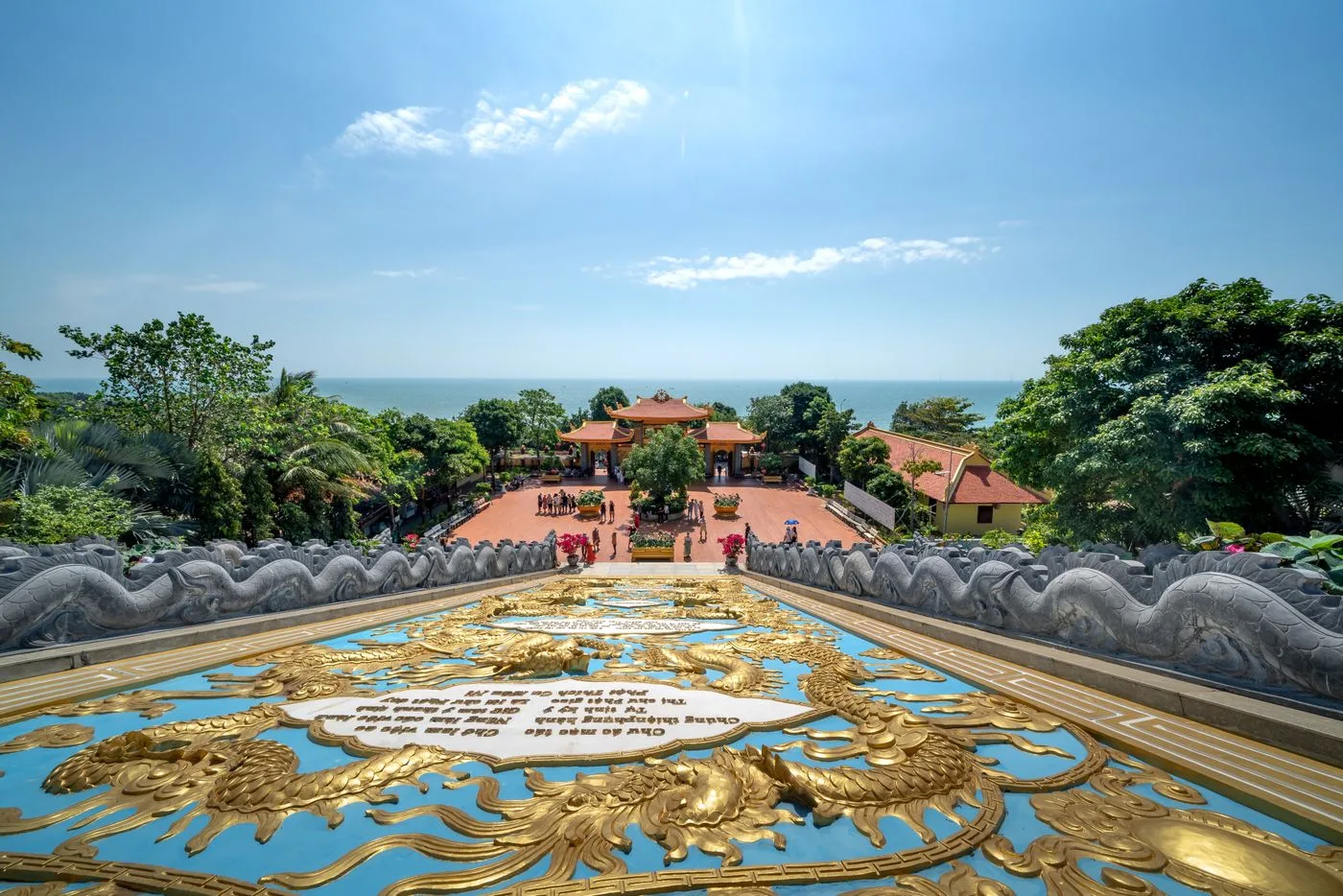
Phu Quoc Stay suggests making Ho Quoc Pagoda a considered, quieter part of the journey rather than a hurried photograph between other attractions. The monastery is a religious space as well as a place visitors appreciate for architecture and scenery. Preparation begins with clothing, access and respect for people using it for worship. Those choices allow curiosity and sightseeing to sit alongside the purpose of the place without assuming that every courtyard, room or viewpoint is simply a visitor attraction.
Prepare suitable clothing for a place of worship, comfortable footwear and water for outdoor sections. Check the actual route and access arrangements, then follow guidance on arrival. Keep conversation considerate and ask before photographing people or ceremonies. If combining the visit with a beach day, bring appropriate dry clothing. A scenic view does not remove the need to respect areas used for religious practice.
Understand the place before arriving
Ho Quoc Pagoda is also known as Truc Lam Ho Quoc Zen Monastery and is associated with the Duong To area. Destination information describes a mountain-backed, sea-facing setting and traditional architectural elements. These are aspects visitors may appreciate, but they do not replace observing the rules of the monastery. For historical or symbolic detail, look for interpretation provided locally or recommended by the responsible organisation. Avoid guessing the meaning of a statue or practice and repeating it as an established fact. Observing carefully and acknowledging what you do not know can make the visit more thoughtful than collecting unsupported stories.
Keep clothing and belongings appropriate and manageable
Choose clothing that suits a respectful setting and allows comfortable movement through courtyards, steps and outdoor spaces. If a beach visit comes earlier, prepare dry clothing in advance instead of improvising on arrival. Carry a modest bag and keep personal items manageable around people entering worship areas. Observe guidance about footwear and which spaces are open to visitors. Companions who prefer to avoid stairs should have an appropriate route considered before the group begins. They should not feel required to complete every section simply because others want another viewpoint. A shorter, considerate visit can be more rewarding than a physically demanding circuit.

Look at architecture without interrupting its use
Notice how roofs, courtyards and successive gateways shape the experience of moving through the site, then pause somewhere that does not block circulation. When worship or another religious activity is taking place, give priority to the people involved. Ask before making a close photograph of an individual and do not move objects or enter private areas to improve a composition. Taking fewer pictures with a better understanding of context may be more memorable than walking through every space behind a raised phone. Local instructions take priority over a social-media photograph showing someone else standing in a place you are not invited to enter.
Leave time for a pause and the surrounding landscape
There is no need to reach every set of steps or remain outside continuously. Find a permitted place to pause, keep water available for the walking sections and consider older companions or children before adding another part of the site. When looking towards the sea, use an appropriate standing position rather than crossing barriers or climbing architectural features for extra height. If conditions become uncomfortable, shorten the exposed section and keep the route back straightforward. A quieter visit can still be worthwhile when the sky differs from promotional imagery. The quality of the experience depends more on attention and consideration than on completing every viewpoint.
- Bring suitable dry clothing after a beach visit.
- Follow guidance on footwear, photography and access.
- Give way, keep voices considerate and respect ongoing activities.

Connect the visit to a realistic southern itinerary
If the same day includes a beach or an An Thoi walk, keep one activity as the main purpose and examine the actual route between stops. Clothing changes, meals and rest belong in the plan. A southern island label does not mean every destination sits next door to the others. Phu Quoc Stay is preparing its accommodation collection and currently accepts homeowner registrations only, not guest bookings. For a future stay, compare a verified address with the journey you want to make. A pagoda or beach photograph is destination context, not evidence of a sample home's position or walking access.
Frequently asked questions
Does everyone need to follow the same circuit?
No. A shorter route or separate resting point can work when the group agrees where to reconnect and follows the site's access guidance.
Can ceremonies be photographed freely?
Ask and follow local guidance. Do not interrupt a ceremony, closely photograph people without agreement or enter private areas to obtain a picture.
Should arrangements be checked again before travel?
Yes. Access, activities and weather can change, and an older source does not establish that every part of the visit remains the same.
A place of worship can offer a meaningful slower moment in an island trip. Modest preparation, careful observation and respectful choices make room to notice more without needing to do more.
Compare your itinerary with the accommodation area of An Thoi · South island. You can also explore Phu Quoc apartment layouts to picture the everyday rhythm of a trip.
Visit Phu Quoc — Thiền viện Trúc Lâm Hộ QuốcVisit Phu Quoc — Ho Quoc Pagoda
Practical guidance prepared by Phu Quoc Stay; calendar and expense examples are illustrative. External sources describe their own services or information and do not establish Phu Quoc Stay policies.
Facilities, prices and usage conditions must be confirmed for the specific property and dates. Interior photographs are illustrative.